Saturday, 18 February 2023

My top 10 flicks of 2022!

 HMs: The Batman, The Tinder Swindler, Don't Worry, Darling and Lightyear.

10 to 1:


James Cameron, after 13 years, returned us to Pandora to catch up with Jake Sully and Neytiri, who are now married parents to a brood of Na'vi kids, and their rainforest world's atmosphere of peace is again targeted for invasion; this time from the sea. I found it less moving than its predecessor and a couple of scenes are almost jarringly similar to ones in the first, but Avatar: The Way of Water is nonetheless confidently directed, logically plotted, visually mouth-watering (of course) and populated with engaging characters, some old, some new. It was worth the long wait.
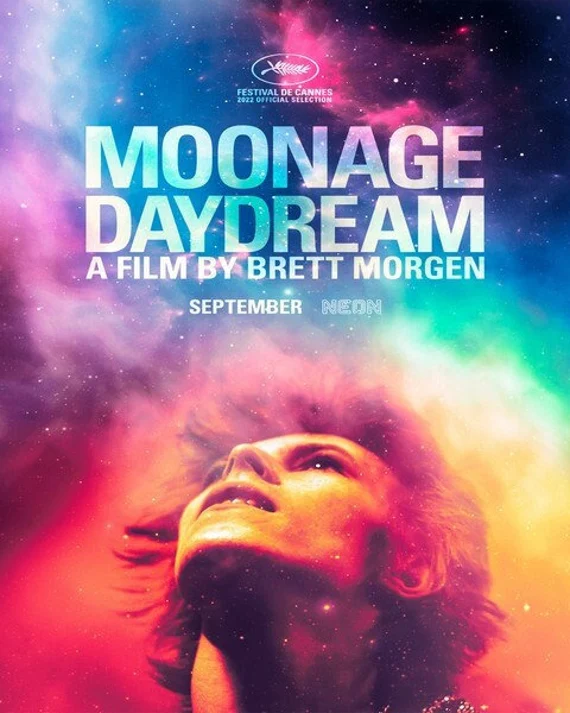

Documentarian extraordinaire Brett Morgen has done it again. After studying the lives and works of Kurt Cobain, Dame Jane Goodall and the Chicago Eight among others, his latest subject is the man who was alternately the Thin White Duke, Ziggy Stardust, Aladdin Saine and (originally) David Jones: David Bowie. I'm not actually a Bowie fan overall (I only like a few of his songs), but Morgen's work has never disappointed me and so when I saw his name attached as director here, I was interested and, despite initially feeling disappointed as I'd gone into it with the wrong expectations, he again justified my faith in his work. With this being another rock star documentary I was initially expecting something very personal and intimate like Cobain: Montage of Heck (2015) but instead, it was very extravagant and weird. But then I realised, that was appropriate for a portrait of Bowie because, unlike Cobain, Bowie was very enigmatic, flamboyant and unorthodox. Morgen seems to know both the right stylistic approach for all his subjects and why to employ a different one for each, and with Moonage Daydream (named after the Bowie song) the result is ultimately visually striking, thought-provoking and exquisite.


Nancy Stokes (Emma Thompson) is a retired schoolteacher who has never had an orgasm despite having had two children with her late husband, so she hires a young male prostitute named Leo Grande (Daryl McCormack), for some private time in a hotel. He's a very laidback but professional guy who reveals his mother believes he works on an oil rig. As Nancy continues her extended stay in the hotel, she continues having sessions with Leo, over which they bond both physically and emotionally. With Good Luck to You, Leo Grande, Aussie director Sophie Hyde and writer Katy Brand take the very private and often sensitive subject of sex and build around it a sex dramedy that struck me as like a mix of Harold and Maude minus the Cat Stevens soundtrack, meets Y Tu Mama Tambien minus the road trip. Thompson and McCormack are both delightful and share strong chemistry, and they also help to make what's ostensibly a movie about sex really one about human connection. Despite a slightly predictable conclusion, I found it captivating, resonant and very tactfully handled.


Those ears, that nose, that laugh. Ever since he steered his way across the high seas in 1928's short Steamboat Willie, Mickey Mouse has become probably the most enduring and recognisable cartoon character ever created. Jeff Malmberg's absolutely beautiful documentary Mickey: The Story of a Mouse is one I'd recommend even to non-Disney fans, as it's about far more than just Mickey and Walt's shared history. It's also about how animation works as a process works; it's about how social attitudes change and then force brands to change; it's about what happens when an artist sends their creation out into the world, just like when a parent sends their child out into it; and, most profoundly, it's about how even after we grow up and old, our favourite children's characters are still always there to comfort and nourish us in dark times like a faithful pet. Overall, it's educational, affectionate and very frank and poignant, and in not using a narration it lets the tale tell itself.


Continuing with Disney, Turning Red is the first Pixar release from a solo female director, debutante Domee Shi, and that's just where it's notability starts. It's 2002, and 13-year-old Meilin "Mei Lee lives in Toronto with her traditional Chinese parents. Her strict and overprotective mother Ming (Sandra Oh) makes her fearful, as opposed to her very easygoing father Jin (Orion Lee), and as such Mei is quite secretive with Ming about her social life, including how she and her friends are huge fans of the boy band 4*Town, who are soon playing a concert in Toronto. But something then awakens in Mei that she can't quite hide: due to a family curse, she now starts transforming into a giant red panda whenever she experiences strong emotions. This transformation inevitably causes difficulties for her at school and home, but gradually enables Mei to learn more about her background and nature. This movie has a couple of noticeable narrative echoes of Brave (2012), but even so it's just wonderful. Shi takes to the directorial chair here like a duck to water, drawing from her own upbringing in Toronto as the daughter of Chinese immigrants to tell an obviously personal story without compromising imagination and charm. Her pacing and her attention to visual detail and consistency are faultless, the voice cast all give vibrant turns, and the music is very fitting. Wise, philosophical, existential, funny, sincere and genuinely touching, Turning Red ultimately turns to gold.


When Agatha Christie wrote her classic theatrical murder mystery The Mousetrap, I don't think she would've expected it to inspire a cinematic crime caper but that's exactly what we've received with See How They Run, from director Tom George and writer Mark Chappell and starring a mixed UK/US cast. It's 1953 in London, and The Mousetrap has just completed its hundredth performance on the West End stage, where the murder has so far been confined to. But that's until the show's sleazy American director Leo Kopernick (Adrien Brody) is mysteriously killed backstage. Cue the no-nonsense Constable Stalker (Saoirse Ronan) and world-weary Inspector Stoppard (Sam Rockwell) being put on the case, they're thrown into a whodunit that's even more puzzling - and certainly much funnier - than the one being performed. I usually prefer my comedies when they're very in-your-face but this is how I think you make a subtle, and clean, one that still raises huge laughs. It's witty and intelligent throughout because everybody involved intentionally (albeit satirically) approaches it like it's a deadly serious drama, despite knowing it's meant to be a farce. Thanks largely to that approach, See How They Run becomes a brilliant, metafictional and utterly hilarious send-up of all those stuffy and conservative English whodunits.


Harvey Weinstein was the most powerful producer in Hollywood, until 2017 when numerous women began coming forward with allegations of sexual abuse and harassment against him. Before long, those women numbered in their hundreds and he was finally sentenced in 2020 to 23 years in prison. The New York Times journalists Jodi Kantor and Megan Twohey's Pulitzer Prize-winning coverage and 2019 nonfiction book provided the basis for She Said, from director Maria Schrader and screenwriter Rebecca Lenkiewicz, and starring Zoe Kazan as Kantor and Carey Mulligan as Twohey. It's maybe unsurprising that this one was a critical smash but a commercial flop, as it deals with both a very heavy subject matter and a very widely publicised scandal (and when I went to see it I was the only male in there), but its importance is unquestionable and beyond that, it's just flawlessly and grippingly made. Schrader and Lenkiewicz both approach this story very cautiously and methodically, striving consistently to get the facts right and to reveal them impartially and objectively, and also to accurately evoke a newspaper's atmosphere as a workplace. They also handle the abuse storyline discreetly and tactfully, and Kazan and Mulligan fill Kantor and Twohey's shoes effectively. As a dramatisation of a journalistic investigation into discrimination, abuse and corruption, I think it's up there with All the President's Men (1976) and Spotlight (2015). I couldn't look away from it, and I left the cinema feeling moved and angry.


Family. We all have it; in fact, it's what we all come from. And often, it inspires art at its most challenging and impactful, which is certainly the case with the Australian documentary Everybody's Oma. Director Jason van Genderen began making home movies with his elderly, Dutch-born mother Oma in 2020 during the pandemic, which radically altered her lifestyle, and after posting those videos online they became a worldwide viral hit with over 100 million views. But there was considerably more to Oma's story, and this doco covers her early life before shifting the focus, with admirable sensitivity, to her eventual battle with dementia and how that also affected the rest of her family. Along the way, we also see how van Genderen and his wife and children rallied together to support her near the end as the pandemic lockdowns hit, with endeavours like creating a makeshift supermarket in her house. The result is a wise, tactful, compassionate, deeply moving and occasionally even (intentionally) funny study of dementia, family and aging. Even more profoundly, it's a study of a subject from her artist, that's also a gift to a mother, from her son.


The old adage "It takes a village to raise a child" is only a cliche because it's true, and Steven Spielberg didn't become the most successful filmmaker in history without his forebears first laying a path for him to walk down. That path is one he has now returned to for what I consider his best film in over 20 years: The Fabelmans. After his parents Mitzi (Michelle Williams) and Burt (Paul Dano) take him to see Cecil B. DeMille's The Greatest Show on Earth in 1952 when he's six years old, in which a train crash sparks his amazement, Sammy (newcomer Gabriel LaBelle), grows up with a hunger to make movies of his own, first recruiting his friends in his Boy Scout troop to make amateur war movies in Phoenix, Arizona. Amidst these adolescent filmmaking experiments, his home life is disintegrating as his parents' marriage crumbles and Sammy makes a particularly upsetting discovery about his mother, the only real happy note at this time being the arrival of his great-uncle Boris (Judd Hirsch), a former Hollywood employee who Sammy naturally sees as a sage. Meanwhile, at school he's the constant target of bullying for being Jewish, mainly from rivals Logan (Sam Rechner) and Chad (Oakes Fegley). But The Fabelmans is only ostensibly about Spielberg's upbringing; I think it's ultimately really a story about family, inspiration, prejudice and forgiveness, and since co-writer Tony Kushner is also Jewish, I'm sure it was quite a personal project for him as well. Spielberg's direction is so thoroughly tender, insightful, delicate and visually refined, he elicits very natural performances from all his cast, with Williams and LaBelle both giving assertive lead turns, it's very calmly edited and photographed by Spielberg regulars Michael Kahn (with Sarah Broshar) and Janusz Kaminski, and John Williams provides a haunting and appropriately piano-driven score. The Fabelmans is the man who I consider the greatest director ever, paying tribute to the people who gave him everything.


But somehow, not even Spielberg with a movie about his own life could dethrone this one. In this absolutely breathtaking recreation of the Viking legend of Amleth (which Shakespeare later adapted with the "h" at the start), King Aurvandill (Ethan Hawke) is killed by his power-hungry brother Fjolnir (Claes Bang), who then assumes the throne and tries to kill Aurvandill's son Amleth (Oscar Novak). The boy narrowly escapes, however, and swears revenge while sailing away. Years later, he returns as an adult (Alexander Skarsgard) to avenge his father's murder and on his journey to do this he meets and falls in love with enslaved Slavic sorceress Olga (Anya Taylor-Joy), gains counsel from the Seeress (Bjork, bringing her singular Icelandic flair to this very Scandinavian story), and finds a simultaneous ally and adversary in his very duplicitous mother, Queen Gudrun (Nicole Kidman). My God, this epic masterpiece just blew my fucking head off when I first saw it in April (yes, it's stayed atop the podium that long) and it's repeated that with every subsequent viewing at home. I think the main reason why it impressed me that much is because of how genuinely distinctive it is: it's very refreshingly divided into five specific chapters, and director Robert Eggers infuses them all with a very expressionistic tone but he employs that for storytelling purposes more than aesthetic ones to be pretentious. There's a lot of slow cinematography with dark colours seen here, and that motif is truly haunting. Also, the editing is suitably sharp and remorseless for a movie about such a notoriously violent civilisation. Robin Carolan and Sebastian Gainsborough's score gives the action an exceptionally powerful beat to which to march, the costume and production design is meticulously accurate, Eggers' and Sjon's screenplay adheres authentically to the language and legends of the era, and Eggers never forgets about character development, ensuring all his cast don't let the visuals and action overshadow them; Kidman and Claes are especially strong. Overall, The Northman is, for me, like a perfectly bowled bowling ball: it is absolutely striking. In the cinema, I did not check my phone or watch once, and I sat through the credits. It's that amazing. It's just so fucking forceful, imaginative, visually spectacular and even emotional, and a very thought-provoking and insightful peek into Viking life and culture. I was W-O-W-E-D. With all due respect to the other movies here, this is my only 10/10 of 2022.

Thursday, 29 December 2022

Something Cult, Foreign-Language or Indie #316: The Ringer (2005).


Desk jockey Steve Barker (Johnny Knoxville) has just been promoted, but also has to fire his friend Stavi (Luis Avalos). He reluctantly does so but hires Stavi to work at his home, where Stavi then loses some fingers in a gardening accident. Being unable to pay Stavi's medical bills, Steve catches up with his uncle Gary (Brian Cox), himself deeply in debt from gambling, and they hatch a plan to match-fix the upcoming Special Olympics in Texas. A reluctant Steve agrees and enters the competition as the developmentally delayed Jeffy Dahmor and Gary, convinced Steve/Jeffy will win the competition in a cakewalk, bets $100 000 that defending champion Jimmy Flowers (Leonard Washington) will lose the gold medal. Despite his initial disgust at feigning an intellectual impairment, Steve goes along with it for Stavi.

With how frankly excessively PC so many of us have become now, I doubt The Ringer would've been made today but as somebody on the autism spectrum, I genuinely found it hilarious and sincerely sweet and here's why. Screenwriter Ricky Blitt and director Barry W. Blaustein clearly have no desire to attack any of the disabled characters here; instead their target is the so-called "hero" Steve, for quite passively complying with such an unethical and fraudulent scheme, and his disabled roommates are the only ones anyway who his act doesn't fool. It also subtly condemns the Special Olympics for how it can really exploit its athletes instead of promoting and celebrating them and for how easily the system can (at least apparently) be rorted. 

The film also criticises stereotypes through its disabled characters without criticising the characters themselves, and the romance between Steve and SO volunteer Lynn (Katherine Heigl) is understated and uncliched. Overall, I think The Ringer is a daring romp with a warm, loving centre that earns a spot on the dais. 8/10.


Friday, 9 December 2022

Something Cult, Foreign-Language or Indie #315: Anna and the Apocalypse (2017).


In Little Haven, Scotland, high school is almost over for Anna Shepherd (Ella Hunt) and she plans to take a gap year before university despite her widower father Tony's (Mark Benton) disapproval. Her friends also have problems: best friend John (Malcolm Cumming) secretly loves her, budding director Chris (Christopher Leveaux) is behind on an assignment and American exchange student Steph (Sarah Swire) is butting heads, thanks to her social justice reportage, with the dictatorial principal Mr. Savage (Paul Kaye). Anna's one-night stand Nick (Ben Wiggins) is also giving her grief. On the night of the school's Christmas show, in which one of the performers is Chris' girlfriend Lisa (Marli Siu), a zombie infections breaks out around town, before the next morning when Anna and John discover it's gone all over town except in the school, where they must take shelter and fight the zombie hordes off - all to numerous song-and-dance numbers in true musical form.

Anna and the Apocalypse has been likened to Shaun of the Dead meets La La Land, and that's a fairly accurate comparison. Based on a 2010 short by Ryan McHenry, who died in 2015 of osteosarcoma at age 27, director John McPhail and co-writer Alan McDonald make this festive horror musical gel, although it took me some time to really see what it was seeking to do. I initially had the feeling, after about 30 minutes, that the songs were too poppy and corny for the horror aspect (although I knew beforehand it was also a musical) and so that then make me very briefly disconnect from it. But then I realised its aims were to satirise both the musical genre for how wholesome and conservative it often is, and the horror/slasher genres for how cliched and stuffy they can be. McPhail and his cast and crew balance the combination through consistent pacing, natural choreography and visuals that are in between being grainy and extravagant.

The songs are catchy and engaging, the cast all demonstrate strong chops with both acting and singing, and the violence gradually builds to a very gruesome climax. It's maybe not as brutally honest or subversive a depiction of adolescence as I would've liked it to have been but regardless, I had fun with Anna and the Apocalypse. 8/10.


Thursday, 1 December 2022

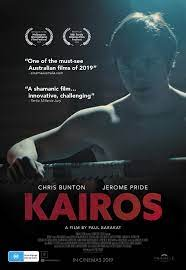
Something, Cult, Foreign-Language or Indie #314: Kairos (2018).


Meet Danny (Chris Bunton), a young man with Down syndrome residing in a foster home. His dream is to become a professional boxer and to work towards this, he practices at his local gym with his stern but loyal trainer John (Jerome Pride). Danny gets many rounds and even a few amateur bouts under his belt before he has an accident with John that leaves Danny injured and John with second thoughts. Undeterred, however, Danny sticks to his goal and meanwhile also finds a potential romance with Ellie (Audrey O'Connor), who also has DS.

Kairos is certainly a well-meaning Aussie film, and kudos to its makers for casting a real Down syndrome performer (the engaging Chris Bunton) in the lead, but its execution really rubbed me the wrong way. Writer-director Paul Barakat insists on making John a seemingly ever-present, non-disabled crucial saviour for Danny on his quest, instead of putting Danny in the driver's seat as an independent hero. As somebody with disability (albeit not DS) I find it deeply demeaning when movies about disability have the protagonist manage to succeed only with a non-disabled character's help; to me that's not much better than when disabled people are villainised in cinema.

Barakat's bland visual style and pacing also don't help, and a couple of dream sequences revert from being incoherent to wise and back again. Plus the supporting cast can only do so much with what are quite underdeveloped characters. Despite its good intentions, Kairos is for me just another uplifting disability drama for non-disabled audiences, trying unsuccessfully to pass for a clarion call for solidarity and change. 6/10.

Tuesday, 15 November 2022

A shopping incident on Monday.

So I'm in Coles on Monday, standing near one of the stalls in the bakery, and unbeknownst to me, another customer (who I didn't even hear or see) notices me put something in one of my pockets and that alerts their suspicion. Then about five minutes later I've moved on to one of the aisles and the manager suddenly appears. I think he's just there to ask me if I need help finding something but I get a completely different line of questioning, about what's in my pockets. I tell him "Just my phone, wallet and car and house keys." That's when I learn this other customer reported me to him. He quickly seems to believe that I hadn't even tried to steal anything (the item I was seen putting in my pocket was my phone, after I'd pulled it out to check it) and to sense just how anxious I am now and so he apologises to me and lets me go, which I thank him for with great sincerity and relief. I then stay in the store for about ten minutes before I quietly leave.

Firstly, I should emphasise I was not, and am not, angry at all with the manager (who presumably had a lot on his plate already); he was just doing his job. Nor am I saying the customer was wrong to consult him about this. I just really resented them not first approaching me personally about it, and here's why. I can understand they might've been afraid of the consequences or overstepping their place as they had no authority there, but when I'm confronted secondhand about something, it makes me feel like I'm some unapproachable psycho. Had I been the witness, I would've slowly approached them and enquired, as impartially as possible, what they'd just put in my pocket, then apologised for prying and, whatever their answer was, then told an employee about it.

I'm really trying to empathise with them but I just can't quite shake how judged and exposed I subsequently felt; I was also angry and very confused. Now, I don't know if the other customer was suspicious of my actions because I'm 6'4 and autistic (because my condition can also affect my body language and posture), although if that was the case I guess I can and should give them the benefit of the doubt. And perhaps I should've been more careful with my phone. But despite being exonerated and very much appreciating that outcome, this incident made a supermarket visit unusually troubling for me.

Friday, 11 November 2022

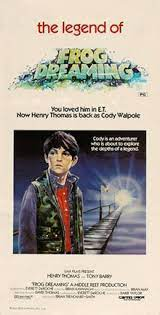
Something Cult, Foreign-Language or Indie #313: Frog Dreaming (1986).


Henry Thomas (yes, the one who befriended E.T.) is Cody, an orphaned American boy living in the Australian Outback with his carer Gaza (Tony Barry). When he's not riding his railbike left, right and centre, the inventive Cody builds things in his garage. One day he learns of a local Aboriginal myth called "frog's dreaming" which is believed to be behind several strange occurrences at the fictional Devil's Knob national park where he lives. That's when Cody recruits his friends, primarily the girl he fancies, Wendy (Rachel Friend) to go on a trek to investigate everything.

Yes, sir. It's The Goonies but in the Outback with a (mostly) local cast. Everything about Frog Dreaming is painfully dated and stagnant even down to the visual effects. Director Brian Trenchard-Smith, who replaced Russell Hagg, brings no zest or humour to his interpretation of Everett De Roche's shamelessly derivative screenplay (although, in fairness, it may have given Trenchard-Smith no room to do so), which tops its genre conventions off with a portrayal of the indigenous Kurdaitcha Man archetype that thankfully would never be considered appropriate today, and has Cody frequently riding his bicycle just like Elliott much more famously did.

Thomas has virtually nothing new to do in a very thin role, Friend is wasted and almost immediately relegated to the token love interest status, and all the adult cast members look totally bored and indifferent (much like I increasingly was while watching it, funnily enough). And then come the deeply hokey effects when we learn what's behind the local disturbances. It's ironic, and unintentionally apt, how Frog Dreaming contains the word "dreaming" in its title, because it almost put in the state of dreaming. 4/10.

Tuesday, 11 October 2022

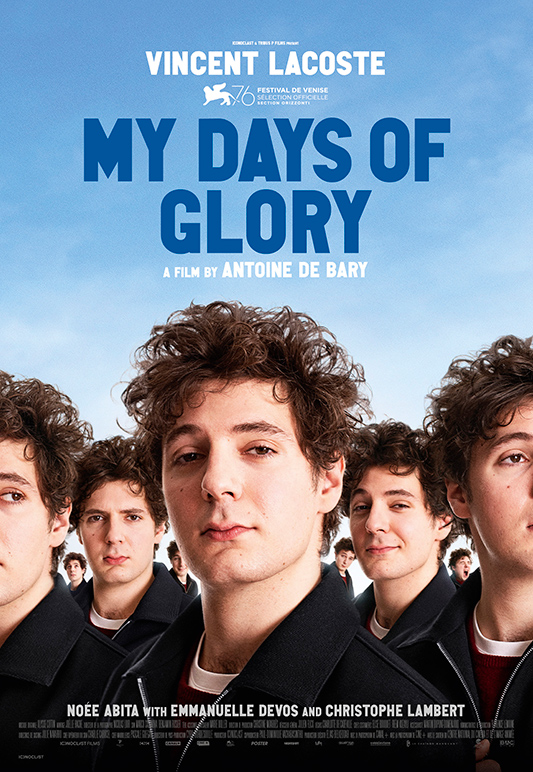
Something Cult, Foreign-Language or Indie #312: My Days of Glory (2019).


Adrien Palatine (Vincent Lacoste) is experiencing a quite unique quarter-life crisis. He's a former child movie star but as he approaches age 30, the role offers have dried up and he's becoming, frankly, a bit of an addict. When he's not drowning his sorrows at the local pub or smoking in the street, he's scrounging around looking for a chance at an on-screen comeback, and also for off-screen love. Prosperity briefly shines on him again when he talks his way into a part in a war movie, but his self-absorbed nature soon jeopardizes both that and his efforts to find and impress his dream girl.

The 2019 French romantic dramedy My Days of Glory is quite reminiscent of (500) Days of Summer, but only in narrative intentions. Where that gem of a sleeper hit explored 21st-century relationships with almost painfully honest accuracy and threw staccato visual and musical surprises into the pot for real vibrancy and fanciness, this (and, with it being French where that was an American film, surely you'd think it would be the more artsy one) deliberately takes the visually conventional route and subsequently feels increasingly bland and boring. I also found its attempts at humour too understated, and while director Antoine de Bary and his co-screenwriter Elias Beldekkar do include a couple of slightly racy scenes, I found them to be placed too late in the story for it to rejuvenate my interest. Lacoste, who I think is almost becoming the French Michael Cera with the kind of roles I've seen him in so far, tries his best to bring nuance and variety to both Adrien and the roles Adrien himself plays, but he carries the entire movie on his shoulders and that's a cross I think most actors would've struggled to bear.

Additionally, the dramatic elements become, I think, too heavy-handed and overall, as both a romance and a coming-of-age flick, I just don't think it has enough zest and imagination narratively, and certainly not aesthetically. My Days of Glory do not, for me, mark de Bary's. 5/10.

Friday, 7 October 2022

My feelings on the Thailand massacre.

On Thursday when I heard news of the childcare centre massacre in Thailand, my heart instantly sank. I had a foreboding, ominous feeling as it was revealed in a breaking news story during the 7pm nightly bulletin I watch. For that reason I deliberately also watched that night's late news just for more details on it. I was sincerely gut-wrenched as those extra details were revealed to me. A massacre in a place for children is usually tragic enough, but here the perpetrator was also the father of one of the children who went there regularly. Then, after the encounter there that lit his fuse and the carnage that ensued, he went home and murdered his own wife and child. I mean, Jesus fucking Christ! How damaged must you be to even consider doing something that wicked?

His name was Panya Khamrab, and he was a disgraced former cop. Keyword: "disgraced." Shouldn't that have sounded alarm bells about him, suggesting he needed to be monitored somehow, or better yet, incarcerated? Had he indeed been behind bars, this massacre wouldn't have happened and a class of innocent children and their teachers would still be alive and none of their families would be grieving. My heart goes out to those families, and may the deceased all rest in peace. These massacres are clearly far from just an American problem; recently we saw that in Russia and now, sadly, it's been Thailand's turn. I don't know which country, or community, will be next, but I hope - against hope - none will.

Something Cult, Foreign-Language or Indie #311: Shorts (2009).


In Black Falls Community in Austin, Texas, 11-year-old Toby Thompson (Jimmy Bennett) is the second child to find a rock with magical powers. Over a series of "episodes," he narratives, and participates in, the story of how this magical rock transforms his community and its townsfolk, culminating in urban mayhem as literally everybody tries to get their hands on it so it can improve their lives.

Robert Rodriguez may be most famous for his crime movies like Sin City and the El Mariachi trilogy, and indeed those kind of films were the ones he cut his teeth on, but in between them he's also made numerous family movies, like the Spy Kids trilogy and The Adventures of Sharkboy and Lavagirl in 3D. (He has five children so obviously he's made all these ones primarily for them.) Now, I thought the Spy Kids sequels both sucked but overall, while I still think crime capers are his specialty Rodriguez makes family movies that are more unconventional and creative than anybody else's and this is no exception. Shorts is unabashedly wacky, intentionally ridiculous and energetic, without a trace of condescension towards children but also not too wholesome for their parents to stomach. Rodriguez has evident fun visualising this narrative but also elaborates on it just long enough for it to be somewhat coherent, his own editing and photography are both crisp and fluid and the music score is adequately strange but not bombastic.

Rodriguez also coaxes engaging performances from all his young cast and the adults all also enjoy themselves, particularly Leslie Mann as Toby's mum and James Spader as the villainous Mr. Carbon Black. I did think the novelty began to wear off near the end, but Shorts doesn't overstay its welcome. It's a refreshing, funny and bizarre family science fiction flick like only Robert Rodriguez could, or would, deliver. 8/10.

Tuesday, 20 September 2022

Something Cult, Foreign-Language or Indie #310: Inside Job (2010).


Most people over age 20 would probably remember the global financial crisis; I'm 34 and I know I do. It was really the first time I ever took much notice of economic matters, despite my long-standing interest in politics. I just don't find economics or especially finance very interesting. But those matters both affect all of us for better or worse, and it turns out they can be explored engagingly after all.

Against all odds, Charles Ferguson's 2010 Best Documentary Feature Academy Award winner Inside Job proves that flawlessly. But how it does that trick is perhaps even more surprising and significant than that it does the trick: it explores the GFC and the fiscal lead-up to it in five segments, beginning with the aftermath of the Great Depression through to the late 1980s recession following Black Monday and how so many major American banks and investment firms gradually acquired too much unregulated power. They were at least as much at fault as the politicians who turned a blind eye to that corruption and their own, and when these banks and firms began fraudulently charging their customers and investors, the subprime mortgage bubble was bound to burst and the GFC was inevitable when, as the film demonstrates, it could've been avoided so easily. The true root of the crisis was the crimes on Wall Street, not of the White House (although the Bush Administration's bail-out efforts tanked infamously), and how those crimes either were covered up and/or went unpunished.

But Ferguson also explores this territory with genuine panache; I suspect he knew this was a very important story but one covering what most people must find a very dull subject and so he takes a very methodical yet energetic directorial approach and simultaneously deconstructs the very complex factual material therein for viewers who mightn't be financial experts, but never patronisingly. He even also takes a rather Michael Moore-esque approach at times with the use of (relevant) pop music and extensive use of archival news footage, and a helpful narration which Matt Damon, one of the most famously politically vocal Hollywood stars, delivers with appropriate objectivity. The result is an illuminating, confident, angering, unbiased and even stylish expose of how corrupt  and fraudulent decisions and agreements made in corporate boardrooms on the other side of the world can create negative ripple effects which, just economics itself, trickle down to the rest of us and, this time, unfortunately did. 9/10.

Friday, 16 September 2022

Something Cult, Foreign-Language or Indie #309: Electrick Children (2013).


Rachel McKnight (Julia Garner) has just turned 15 and is a member of a Mormon group in rural Utah so fundamentalist they're borderline Amish. One night she listens to a cassette player for the first time and hears a cover of the song "Hanging on the Telephone." Her more obedient brother Mr. Will (Liam Aiken) confiscates the player now, saying it is only to be used for God's purposes, but when Rachel then discovers she is pregnant, she believes she has conceived miraculously like the Virgin Mary, through the cassette player. Once their parents inevitably find out, Mr. Will is blamed for impregnating Rachel and asked to leave the community and Rachel is told she will entered into a shotgun marriage the next day at the insistence of her father Paul (a jarringly miscast Billy Zane). That's when she flees to Las Vegas with an initially unsuspecting Mr. Will, who's asleep in the back of the family's truck in which she drives there. Once they arrive in Vegas, Rachel is all about freedom and adventure while Mr. Will tries to make her return home before reluctantly giving in, and then they meet Clyde (Rory Culkin) and his gang of skater mates, who broaden both Rachel's and Mr. Will's horizons.

This 2013 debut from writer-director Rebecca Thomas, who herself was raised Mormon, initially shows promising signs of subversion and originality, but then increasingly indulges in tameness and a flurry of coming-of-age narrative cliches. Rachel and Mr. Will's Vegas adventures see them (involuntarily, in Mr. Will's case) explore sex and substance abuse, but themes like that don't alone make a movie daring IMO and especially not when they're depicted in such a tactful but soft-core manner. There's also very little humour here to spice it up and not enough of a contemporary music soundtrack to add energy to it. Garner gives a beautifully dignified and balance performance as Rachel and Aiken adequately makes Mr. Will the grounding, centrifugal force to her closet wild child, but Culkin really doesn't have much to do as the token unrefined love interest.

Maybe it was meant to be somewhere between wholesome and provocative, but it just didn't get that balance right and it certainly didn't feel fresh or imaginative to me. Electrick Children did not inject me with a shock. 6/10.

Something Cult, Foreign-Language or Indie #308: The Machinist (2004).


Trevor Reznik (Christian Bale) is a factory machinist with such a bad case of insomnia he hasn't slept in a year, and it's left him dangerously emaciated. His appearance and behaviour are already alienating his co-workers, who turn against him fully when he's involved in an accident where one of them, Miller (Michael Ironside) gets his left arm caught in the machinery and loses it. Trevor is blamed for the accident but claims a co-worker named Ivan, who nobody else sees or even knows of, distracted him. Privately, Trevor finds romance with prostitute Stevie (Jennifer Jason Leigh) and waitress Maria (Aitana Sanchez-Gijon), who works at an airport diner Trevor frequents, and he absorbs himself in classic Russian novels, but none of these refuges can solve his mounting paranoia and continued lack of sleep.

The Machinist intends to lift the veil on insomnia, and the resultant paranoia, at their most extreme, and that's territory too infrequently explored in mainstream cinema. But while Bale's commitment to his role (he lost over 28kg for it) pays off with a dynamite performance, and Scott Kosar's screenplay is empathetic and unflinching, everything else here is, I think, misjudged and even timid, and that's all because of Brad Anderson's direction. How he visualises this narrative simply feels much too static, detached and conventional for a thriller overtly about paranoia. Where a considerably more unsubtle approach would, I think, have more powerfully conveyed Trevor's mental state, the result of the approach Anderson instead took struck me as blandly suspenseless and even indifferent. It reminded me somewhat of David Fincher but mind you, I've never liked any of his movies either. Plus, Roque Banos' score is so understated it may as well not even be there.

Overall, this Machinist is very played, but I think his machine needed cogs of an entirely different kind. 6/10. 

Thursday, 1 September 2022

Something Cult, Foreign-Language or Indie #307: Lean on Pete (2017).


Charley Thompson (Charlie Plummer) is 15 and lives with his single father Ray (Travis Fimmel), and soon finds casual work caring for a retired racehorse named Lean on Pete, whose owner Del (Steve Buscemi) is a hot-tempered man who nonetheless sees something in Charley and takes him under his wing. When Ray is then attacked and hospitalised with life-threatening wounds, Charley insists on staying at his side but Ray implores him to instead focus on his work with Pete and Del. Then, after Ray dies and Charley learns Pete is to be taken to Mexico to be slaughtered, he clandestinely steals Pete at night and takes him to Wyoming in Del's truck to live with Charley's Aunt Margy, the only mother figure he has ever known.

I'm sorry, but between his 2015 effort 45 Years and this, could writer-director Andrew Haigh be any duller as a filmmaker? I'm starting to feel like his movies should come with a defibrillator for the viewer to jolt them into vivaciousness with. His style is not slow; it is utterly glacial and maybe even worse than that. A movie being slow-paced is fine, provided (IMO) it still have some semblance of variety and suspense, but so far I'm sensing none of either of those qualities in Haigh's work. However, in fairness, I managed to sit through all of Lean on Pete; 45 Years alienated me after 30 minutes. 

It's an adaptation of a novel by Willy Vlautin and maybe my frustrations with the languid plot are largely his responsibility instead of Haigh's, but I still think Haigh should've brought a bit more energy and, again, suspense, to how that narrative was told. Plummer makes an adequately relatable protagonist in an understated turn and Magnus Joenck's photography is lucid and precise, but those were the only pros I noticed here and James Edward Barker contributes an awfully uninspired and flat score. Overall, I wouldn't recommend you Lean on Pete because the story he's in, and how Haigh tells it, could make you nod off. 5/10.

Friday, 19 August 2022

My weekend's off to a VERY stressful start.

So yesterday afternoon I took the bus to my parents' house 30 minutes out of town, to pet-sit for them while they're having this weekend away. But then when I arrive there, I found the usually unlocked back screen door locked and I had no key; I didn't take one with me because again, that door is usually left open for me to enter the house when necessary. I opened the lock there containing spare keys, only to find neither of those were for neither screen door. I then tried calling my parents but they had no reception and by now I was already stressed, so I had to swallow my pride and call my sister, who lives a few minutes away. When she arrived and I explained everything (all of which she took with a grain of salt, as she continued to do later), she then had to drive me home and back again just so I could retrieve my other set of keys, which turned out (to my genuine confusion) to also be the wrong ones; I also tripped over on the lawn once we returned to my parents' house because I hadn't realised one of my shoelaces was undone. So then we both had no alternative, as it was now past 6pm, but to go to her house for the night, where I had dinner, watched my team the Broncos lose by 48 points and sleep on a foldout bed (although that was easily preferable to the floor). I had an anxiety attack before I finally nodded off.

Then today I woke at 6:30am, and after 8am we all went (including my brother-in-law now) back to my parents' place to double-check the lock and the keys inside it per my sister's insistence. After she and he saw those really were also the wrong keys I tried not to be too snide or snarky when I said, "See, I told you they didn't work." They both then left, with my approval, and I stayed there to at least pet-sit like I was in town all along to do, albeit for much shorter than planned, and I helped myself to a beer there because I figured, 'Damn it, I deserve one after a shake-up like this.' I then planned to catch the bus home at 11:12am but as I left the service station toilet (just across the road from the bus stop) at that minute, the bus was departing so I stayed put and tried to hail the driver when they turned around and passed me, to no avail. By then I was fucking livid, so after seeing when the next bus was and learning it was over three hours away, I tried to think for a few minutes and then realised I had to call a taxi. So I did that, and once it arrived the ride was fine and the driver was a lovely lady who played great music and undoubtedly was about to get a big windfall from my 30-minute trip. Her company was a big bright spot, but everything culminating in it was confusing, guilt-inducing, embarrassing and incredibly stressful for me. Now I'm back home, but as soon as I got here, I hunched over with relief and almost cried. Hopefully, this weekend will improve for me.

Tuesday, 2 August 2022

Something Cult, Foreign-Language or Indie #306: Sword of the Stranger (2007).


It's the Sengoku period in Japan, and Kotaro is an orphaned young boy living in the countryside with his pet Shiba Inu dog, constantly on the run from violent pursuers. One day while sheltering in a disused temple, Kotaro meets Nanashi, a wandering swordsman who is actually a ronin: a Samurai without a current master. Nanashi quickly comes to dislike Kotaro (and, frankly, with some justification) but then they're attacked and pup Tobimaru needs medical attention, so Nanashi then reluctantly takes Kotaro and Tobimaru with him on his travels. En route, Kotaro turns out to be a prophesied child requiring training to fulfill his destiny.

This anime Samurai road movie was almost nominated for the 2008 Best Animated Feature Oscar; keyword: almost. Personally, though, I wouldn't have even submitted it for consideration. Its animation is faultless but its narrative is one hackneyed cliche after another, with bland dialogue and numerous ignored chances for humour. Plus, I found Kotaro really quite annoying. He goes from rude and bossy to overly cute and vibrant, and that contrasting change also imbalances his character arc quite jarringly. I understand the idea of making young protagonists work for our affection but here that bridge was just a bit too far to cross.

Naoki Sato's music score is actually genuinely beautiful, and with the animation it forms a rather and crisp and fresh pastry. But the filling - the narrative - was one I found so derivative and predictable, it resulted in a very insipid pie for me. I'm afraid I think Sword of the Stranger is in dire need of sharpening. 5/10.


Something Cult, Foreign-Language or Indie #305: The Lighthouse (2019).


In New England in the 1890s, Ephraim Winslow (Willem Dafoe) accepts a job as a "wickie," or a lighthouse keeper, with the island's longtime keeper Thomas Wake (Robert Pattinson) as his supervisor. Ephraim is contracted for a month, and the job entails more than just operating the controls. The lighthouse will be his home, with Wake, for the month and so in that time they will need to bond. But as the month progresses, and a massive storm seals them inside, Winslow and Wake each come to harbour very uncertain, even suspicious feelings about the other man.

This 2019 black-and-white sophomore feature from Robert Eggers, who co-wrote the screenplay with his brother Max, was one I was keen to see after his latest movie The Northman absolutely blew my mind, and I was correct to be interested in it. Eggers is quite obviously an art house filmmaker and he frequently incorporates German expressionistic motifs and natural atmospheres, but he seems to know those touches are (at least, I think) suitable and effective for storytelling reasons instead of aesthetic ones. He invokes those stylings merely to put viewers in the mood and mindset of the movie and its characters, and in this case that's why the expressionistic inflections (if that's the right word) work so well. Winslow and Wake are both increasingly unhinged, isolated and untrusting of each other and we won't feel any tension from the film if the specifics of their shared situation aren't driven home to us. Eggers drives this home to us with a consistently firm grip on the steering wheel.

But this effect isn't all Eggers' responsibility. His regular cinematographer Jarin Blaschke's unsettling photography was deservedly nominated for an Oscar and a BAFTA, the production design is realistically intimate yet striking in details and Mark Korven contributes a chillingly minimalist score. The only flaw I noticed here was what I considered Dafoe's almost too hammy performance in one scene; by contrast Pattinson stays in control of his turn throughout. It didn't impress me quite as much as The Northman did, but The Lighthouse still stands as a disturbing, but shining beacon. 9/10.


Friday, 15 July 2022

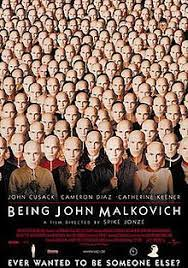
Something Cult, Foreign-Language or Indie #304: Being John Malkovich (1999).


Struggling puppeteer Craig Schwartz (John Cusack) reluctantly accepts an office job to make ends meet for himself and his pet enthusiast wife Lotte (an almost unrecognisable Cameron Diaz). As a clerk his professional life is uneventful, until one day he stumbles upon something most bizarre and unexpected behind a filing cabinet: a portal that leads directly into the brain of Hollywood superstar John Malkovich (playing a fictionalised version of himself, obviously). So then, of course, he opens it and becomes John Malkovich for 15 minutes, after which time he's removed from John's brain and dumped onto the New Jersey turnpike. Craig then tells Lotte and his playful, free-spirited colleague Maxine (Catherine Keener) about the portal and, after gradually convincing them that none of what he's saying is ridiculous horseshit, they both, too, join in on the fun in becoming John Malkovich. Along the way, Lotte and Maxine get to know each other, and all three of them come to understand more about their own psychologies from having literally entered and meddled in somebody else's.

Frequent collaborators Spike Jonze and Charlie Kaufman have since made off-the-wall movies like 2002's Adaptation., 2020's I'm Thinking of Ending Things, 2013's Her and my personal favourite, Jonze's 2009 masterpiece Where the Wild Things Are. And it all started here for both. Being John Malkovich made Jonze, aged just 30, one of the youngest ever Best Director Oscar nominees and Kaufman was also nominated for Best Original Screenplay (they both lost to Sam Mendes and Alan Ball respectively for American Beauty). This is a proudly weird film, but its weirdness is the tolerable kind in that the premise is weird, but how it's explored is very lucidly handled and what it's meant to allegorically represent is ultimately quite relatable and profound. In other words, it's never weird just to be unique or ostentatious. Cusack does his usual shtick, but Diaz is surprisingly effect in a role that's both dramatic and comedic and Malkovich revels in playing a highly exaggerated literal version of himself, but Keener (who herself was nominated for the Best Supporting Actress Oscar; she lost to Angelina Jolie in Girl, Interrupted), is easily the standout with an excellently layered and understated turn in a role that was probably harder than it looked. It's also sharply edited, filmed with crisp energy, and a pulsatingly effective score is ladled over it all.

Again this is certainly a postmodern brain-teaser that demands your disbelief to be suspended, but if you can do that, I think you'll find Being John Malkovich to be an engaging and rewarding filmic statement about human psychology and relationships. 9/10.


Thursday, 14 July 2022

Something Cult, Foreign-Language or Indie #303: My Mistress (2014).


Charlie (Harrison Gilbertson) is a lonely and sheltered 16-year-old boy on the Gold Coast reeling from the recent discovery of his father committing suicide. While then trying to find outlets to ease his grief, he meets Maggie (Emmanuelle Beart), a French housewife who just also happens to be, albeit secretly, a BDSM dominatrix. After landing work with her as a pool boy (nothing cliched about that, huh?), Charlie soon has the hots for Maggie and becomes a willing participant in her private sexual games. Meanwhile, his life outside Maggie's house is almost as dramatic but much less interesting to him.

Look, admittedly what grabbed my attention about this 2014 Aussie erotic drama was the sexual content but even with that, I found My Mistress increasingly insipid and even tame. I can only liken it to a piece of chewing gum: initially it's absolutely delicious, but from a lack of variety its flavour runs out after about 20 minutes. The BDSM scenes are discreetly handled but I just got the sense director and co-writer Stephen Lance either deliberately or was forced to water them down to avoid the movie getting an R rating, and the rest of the narrative they're in I found seriously dull and hackneyed. The lack of a music soundtrack compounded this, and there's no sense of romanticism or lushness in the cinematography either.

Beart, one of the icons of modern French cinema, seems to enjoy spicing her screen image up here as a publicly conservative yet privately wild housewife, and Gilbertson keeps the sweet innocence to a pleasant minimum, but their efforts only make somewhat of a difference. For me, My Mistress is an underwhelming and timid telling of a narrative that could've been tactful, daring and brilliant. 6/10.

Thursday, 7 July 2022

Something Cult, Foreign-Language or Indie #302: 12 Monkeys (1995).


In 1996, a deadly virus decimated the Earth's population. The survivors had to take shelter underground, and a group called the Army of the Twelve Monkeys were allegedly behind the outbreak of the virus. Jump forward to 2035, and James Cole (Bruce Willis) is a prisoner in an underground compound who's chosen to travel back to 1996 with a cure to save humanity. However, he is erroneously sent back to 1990 instead, when after trying to tell authorities he is from the future to save humanity from the impending virus, psychiatrist Dr. Kathryn Railly (Madeleine Stowe) diagnoses him as a paranoid schizophrenic and has him sent to a mental hospital. There he meets anarchic legitimate patient Jeffrey Goines (an Oscar-nominated Brad Pitt), whose late father Dr. Leland Goines (Christopher Plummer) may have held the answer to stopping the virus. Cole now fails an escape attempt but then returns to 2035, before finally arriving in 1996. From there he kidnaps Dr. Railly and forces her to take him to Philadelphia to hopefully find the Army of the Twelve Monkeys, or a trace of Dr. Goines.

In true Terry Gilliam form, this movie is very weird; however, alongside his less mainstream works like Time Bandits and The Adventures of Baron Munchausen, it's actually conventional, at least visually. It's far more cerebral than either of those ones, which are both visually and narratively postmodern and outlandish. I'm not sure Gilliam is as well-suited to science fiction as he is to fantasy, which tends to be more spontaneous, but kudos to him nonetheless for diversifying here and his direction patiently unravels the very technical and esoteric themes in this narrative that are very characteristically SF. Husband and wife David and Janet Peoples' notably smart and lucidly plotted screenplay, based on the 1962 French film La Jetee, meshes well with Gilliam's understanding interpretation of it, and Roger Pratt's photography and Mick Audsley's editing combine to keep everything flowing evenly. Finally, Willis, Pitt and Stowe each make their characters jump engagingly to life and collectively form a strong trio of anchors through the narrative.

I don't think it's quite good enough to have inspired a TV adaptation, nor is it as brilliant as Gilliam's previous effort, 1991's The Fisher King, but 12 Monkeys is nonetheless a refreshingly brainy mainstream science fiction thriller that demands you pay attention to its maze-like structure, and amidst this interminable real-life pandemic it may have acquired even more relevance still. 9/10.

Saturday, 2 July 2022

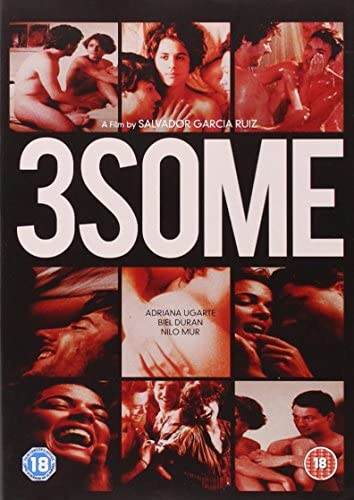
Something Cult, Foreign-Language or Indie #301: 3some (2009).


Jose (Adriana Ugarte), Marcos (Nilo Zimmerman) and Jaime (Biel Duran) are arts classmates at a Spanish university. To help Marcos with his impotence, Jaime sets him up with Jose, whose portrait Jaime has agreed to paint for their course. Once Jose and Marcos get acquainted, Jaime joins the fold and they have a menage a trois which exposes, among other more physical things, their shared and subjective dreams and feelings. Soon, however, Marcos and Jose become rather uncomfortable with the situation, and Jaime refuses to give Jose his portrait of her once he completes it, which deepens the estrangement.

This very erotic Spanish romantic drama from director Salvador Gonzalez Ruiz and writer Enrique Urbizu and based on Almudina Grandes' novel is very strongly reminiscent of Alfonso Cuaron's Y Tu Mama Tambien (2001) and Bernardo Bertolucci's The Dreamers (2003) as a sexually-charged coming-of-age film with twenty-somethings. But while it initially has considerable spice and charm, for me it peaks (in more ways than one) about forty minutes in. I had no problem at all with the sexual content; in fact, admittedly I watched it primarily for that. But those scenes are so frank and daring yet tactful, and so stuck together in one section of the film, the rest just didn't come close to being as vivid for me. The two afore-mentioned films were more cohesive and effectively sensual for me because they spread their racy content throughout their durations with adequate gaps in between and also touched on other topics rarely explored in such films like politics and bourgeois culture. This one, meanwhile, has flavour that lasts about as long as bubblegum's for me.

The three principals have adequate chemistry together and give understated, natural and (given the content, brave) performances, but for me 3some collapses under the burden of its narrative and the misjudged rendering of that. I also thought it needed more of a soundtrack. 6/10.